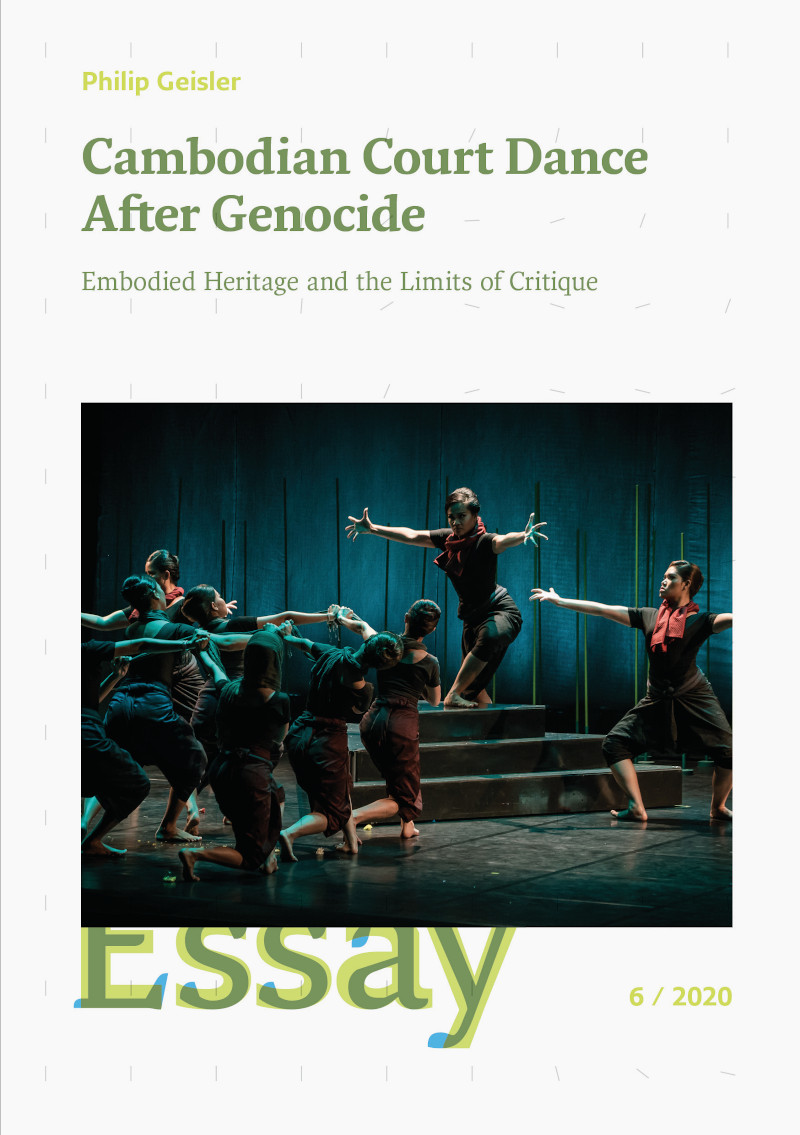
In unserer Essay-Reihe ist soeben mit Philip Geislers »Cambodian Court Dance After Genocide« der sechste Band erschienen.
Philip Geisler »Cambodian Court Dance After Genocide« (Download PDF or read online)
Contemporary Cambodian royal court dance poses are often claimed to be part of an uninterrupted continuity of tradition proven by the 12th-century bas-reliefs of dancers at Angkor Wat. However, the types of dance performed in this period re-main unknown. This essay examines how French colonial politics utilized a wide range of representation to create an aesthetic that persuaded constituencies in Europe and Asia to find a cultural essence in the genre’s form. Assessing the interplay of cultural practices based in embodiment and the epistemological system of representationalism that fosters absence, the essay traces the process of authenticating dance as an intangible tradition in the modern era. Today, this creation has become a nationalized heritage backed by UNESCO. In Cambodia’s postgenocide society, though, the dance’s status as world heritage empowers activist contestations of its institutionally authorized forms that serve to heal trauma and socially emancipate marginalized groups. Such non-official incorporations function as embodied archives that call upon secular scholarship to reframe its methods through empathy.